

I love sparkling wine. It's important to say that from the outset, because what follows is not driven by prejudice. Good sparkling wine—whether it's Champagne, Franciacorta or a fresh, fruit-driven Cava—is exciting, complex and undeniably captivating. The craft behind it is fascinating in its own right. So this article is not an argument against sparkling wine.
Rather, it is a response to a trend. More and more producers in Tokaj are turning towards sparkling wine, while fewer and fewer seem willing to ask the question that inevitably arises sooner or later: what does this actually offer Tokaj, and what are we ultimately trying to achieve?
The Misunderstanding That Explains Everything
Over the years, I've had the opportunity to taste a great many sparkling wines from Tokaj. Some genuinely showed promise—fresh, vibrant and driven by lively acidity. Far more, however, left me with the feeling, even after the first glass, that something wasn't quite right. The problem almost always begins with the same misconception: the belief that making sparkling wine simply means harvesting two weeks earlier. Pick sooner, preserve the acidity, avoid excessive sugar accumulation—and the base wine is ready.
Unfortunately, it isn't that simple.
Sparkling wine is not the result of an earlier harvest. It requires an entirely different approach to canopy management, grape handling, vinification, technology and infrastructure. More importantly, it demands years—often decades—of experience before a producer truly understands the craft. I'm not alone in this view. Gabriella Mészáros, international wine academic and head of the Wine College (Borkollégium), expressed it succinctly during a professional sparkling wine tasting. In her view, determining whether Tokaj is capable of producing truly outstanding sparkling wine would require 25–30 producers consistently making excellent, age-worthy cuvées—and that simply does not exist today. This is not a dismissal of Tokaj sparkling wine. It is a professional benchmark worth considering before declaring that "the future is already here."
Champagne has spent generations refining its expertise. In the Prosecco region, Glera did not become the world's best-selling sparkling wine grape overnight; decades of consistent work, investment, infrastructure and a shared regional vision made that possible. By contrast, we often assume that an existing winery, existing equipment and a handful of adjustments are enough to enter that competition.
That isn't pessimism—it's reality.
I Understand the Economic Logic—But I Disagree with the Conclusion
I understand why this direction is appealing. The market for sweet wines has undoubtedly contracted, consumer preferences have shifted, and the great sweet wines of Tokaj reach far fewer tables today than they did twenty years ago. If you run a winery and see that Aszú is selling more slowly, looking for an alternative is only natural. Sparkling wine appears to offer an obvious solution. Demand is growing, it is fashionable, and it seems relatively accessible. A well-made cuvée can command a higher price than many still wines, while generating revenue far sooner than a long-aged Aszú. I understand the economic logic. What I question is the conclusion.
And this is not merely a matter of personal opinion. The figures tell a more nuanced story.
At the Etyek Sparkling Wine Conference in September 2025, the State Secretary for Agriculture at Hungary's Ministry of Agriculture announced that around 130 wineries—both large and small—now produce sparkling wine in Hungary. This, however, is not the result of decades of gradual professional development. A significant turning point came in 2012, when changes to excise regulations allowed wineries to produce limited quantities of traditionally bottle-fermented sparkling wine without lodging an excise guarantee. As the State Secretary pointed out, only a decade earlier the number of sparkling wine producers had been only a fraction of what it is today. In other words, the current wave of sparkling wine production is, to a considerable extent, the consequence of a regulatory change rather than the outcome of a long-term strategic or market-driven evolution. When barriers are removed, many producers naturally enter the category. That alone, however, does not mean that everyone should. The demand-side figures also paint a more nuanced picture. Hungarians are not traditionally heavy consumers of sparkling wine; for most people, it remains closely associated with New Year's Eve and other special occasions. What has genuinely expanded is export. Last year, Hungarian sparkling wine exports approached five million litres, with a value of €10.8 million—almost double the figure recorded in 2021. This year, exports are projected to increase by almost another 30 per cent. These figures demonstrate that Hungarian sparkling wine is attracting growing international attention. Yet that attention is primarily directed at Hungary as a whole, and especially towards established producers with dedicated infrastructure—most notably the major sparkling wine houses of Etyek. It does not necessarily follow that a newly emerging small producer in Tokaj will benefit from the same momentum.
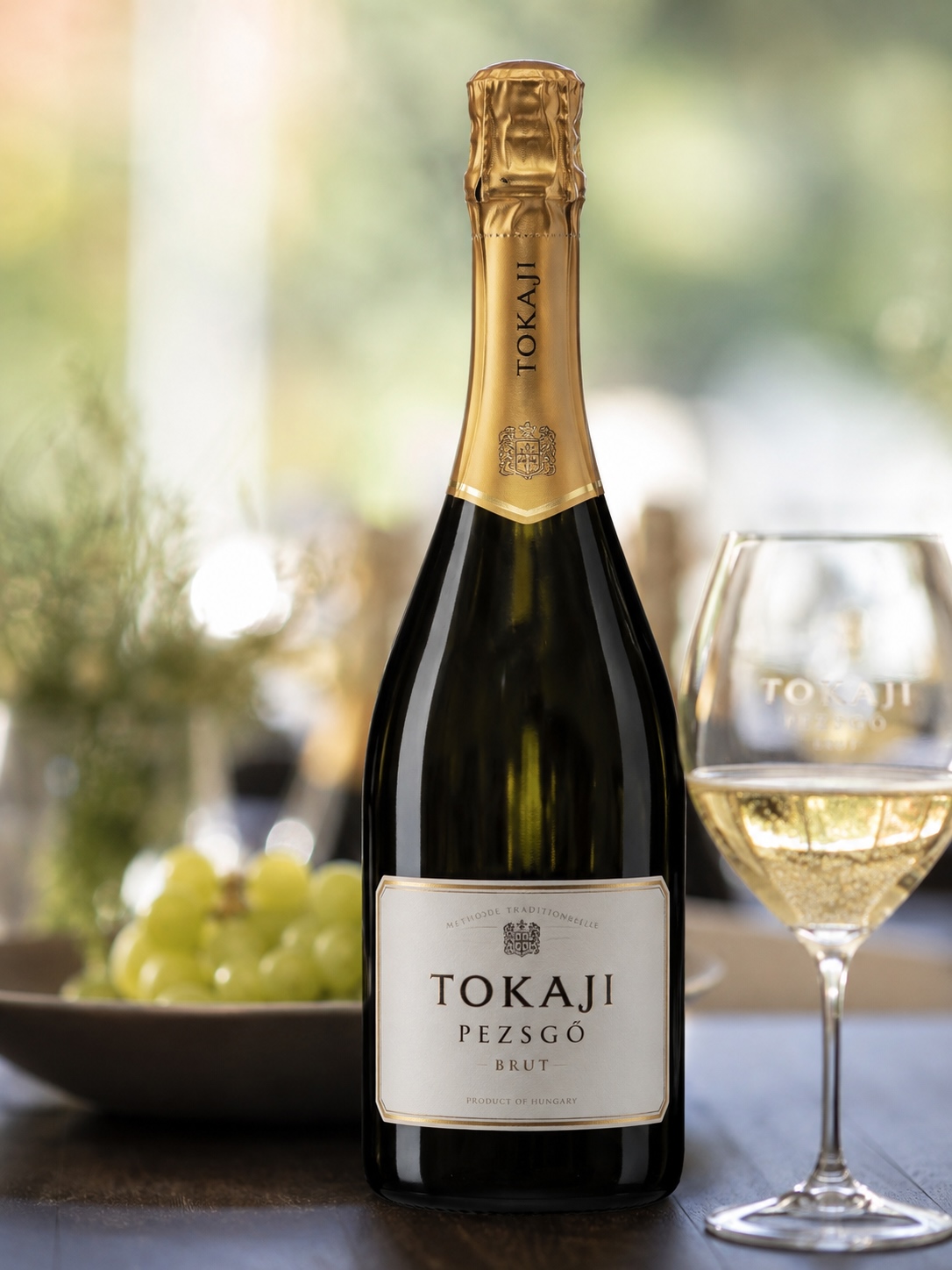
This brings me to what I see as an important gap. There is no publicly available, precise data showing exactly how many of those 130 sparkling wine producers are located in the Tokaj Wine Region. I find that significant in itself. If a wine region cannot clearly quantify how many producers have embraced a new direction, it suggests that what we are witnessing is less the result of a consciously developed regional strategy than a series of individual responses to changing market conditions. We know that Sauska currently produces the largest volume of sparkling wine in Tokaj in its own dedicated facility. We also know that shared sparkling wine infrastructure is available within the region, reducing part of the technological barrier to entry. What remains unclear, however, is how many smaller producers are building genuinely long-term, carefully conceived sparkling wine programmes—and how many simply see sparkling wine as an alternative outlet for fruit from more difficult vintages. That is precisely the question for which, at present, no reliable figures exist. Because the real question is not what the market happens to be looking for today. The real question is what Tokaj can genuinely offer that no one else can. We still lack a convincing answer to why a consumer should choose a sparkling wine from Tokaj over Champagne or Prosecco. We do, however, have a compelling answer to why they should choose Tokaji Aszú or Furmint.
We simply do not tell that story loudly enough.
What We Already Have—and Don't Appreciate Enough
Tokaj already possesses what many wine regions spend decades trying to build: centuries of tradition, an internationally recognised name and a clearly defined identity. Outside Hungary, when people hear the name Tokaj, they think of Aszú. Furmint, meanwhile, is becoming increasingly familiar to sommeliers around the world as a distinctive, age-worthy dry wine. These are not marketing inventions. They are genuine values shaped over centuries. The perception that Aszú is becoming "unsellable" is not, in my view, a question of quality. It is a consequence of changing consumer habits and inadequate communication. And communication can be improved.
Sauternes has not disappeared from the wine lists of the world's finest restaurants. Germany's great Trockenbeerenauslese wines continue to find their audience. Not in the mass market, certainly, but within the premium segment—precisely where Aszú belongs, provided it is positioned accordingly. Yet instead of strengthening what is already uniquely ours, many producers are preoccupied with creating something that demands expertise, technology and experience they are still in the process of developing. Meanwhile, the wines that truly define Tokaj are gradually slipping into the background.
Diversity, Yes—But Not Without a Strategy
I'm not suggesting that making sparkling wine is somehow wrong. Diversity is a strength—provided it is supported by knowledge, purpose and a solid professional foundation. If a producer approaches sparkling wine with genuine commitment, invests in the necessary infrastructure, masters the technology and has a clear vision of the market, I have nothing but respect for that. What I struggle to understand is the absence of a clear direction. When wineries shift almost entirely towards sparkling wine, as though nothing else matters, while the region's identity, the uniqueness of its terroir and centuries of accumulated knowledge remain underused in the background, I cannot help wondering whether the focus has shifted too far. Nor do I believe that entering a fashionable category will solve what is, at its core, a problem of communication and strategy. Sparkling wine is not the solution. The solution is to learn, once again, how to explain why what Tokaj already possesses is exceptional—and to build on the values that have defined the region for centuries.
Before any winery in Tokaj decides to pursue sparkling wine, it is worth answering a few simple questions honestly. Do we have the right technology? Is there years of genuine expertise behind it? Do we know exactly who this wine is for, why we are making it, and what it can offer that Champagne or Prosecco cannot?
If those questions can be answered with confidence, then by all means, make sparkling wine—and make it well. If they cannot, perhaps it is worth looking again at what Tokaj already has.
It simply needs to be told.