

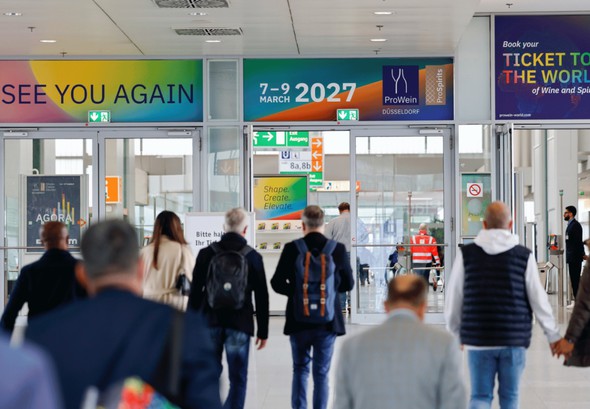
Cover pic: ProWein Düsseldorf / Messe Düsseldorf @Tillmann
Export is no longer simply a growth strategy for many wineries in Hungary and across Central and Eastern Europe – it’s increasingly becoming a necessity. As domestic consumption is slowing in many markets, production costs are continuing to rise, and competition for shelf space has never been fiercer, this means every euro spent on marketing has to count.
International trade fairs remain one of the biggest investments many small and medium-sized wineries make each year, but they are also facing increasing scrutiny. With Wine Paris gaining momentum and buyers becoming more selective about where they travel, producers considering exhibiting need to ask themselves a simple question: which fair is most likely to generate business?
This is just what ProWein's new Director, Frank Schindler, says the Düsseldorf exhibition has been asking itself.
"We had to ask ourselves who needs us today and what people need from us," he explains. His answer is a repositioning built around "More Focus. More Proximity. More Industry" – a strategy that places commercial results ahead of headline exhibitor numbers.
Whether that approach succeeds will only become clear after the 2027 edition, but several of the planned changes could make ProWein more attractive for smaller wineries from Hungary and the wider CEE region.
Discovery Zone: lower risk, higher visibility?
Perhaps the most interesting innovation is the new Discovery Zone.
Instead of requiring producers to invest in a large standalone stand, the Discovery Zone offers an affordable, curated exhibition space for smaller, younger and innovative businesses, making it easier for buyers looking for new suppliers to discover producers they might otherwise overlook.
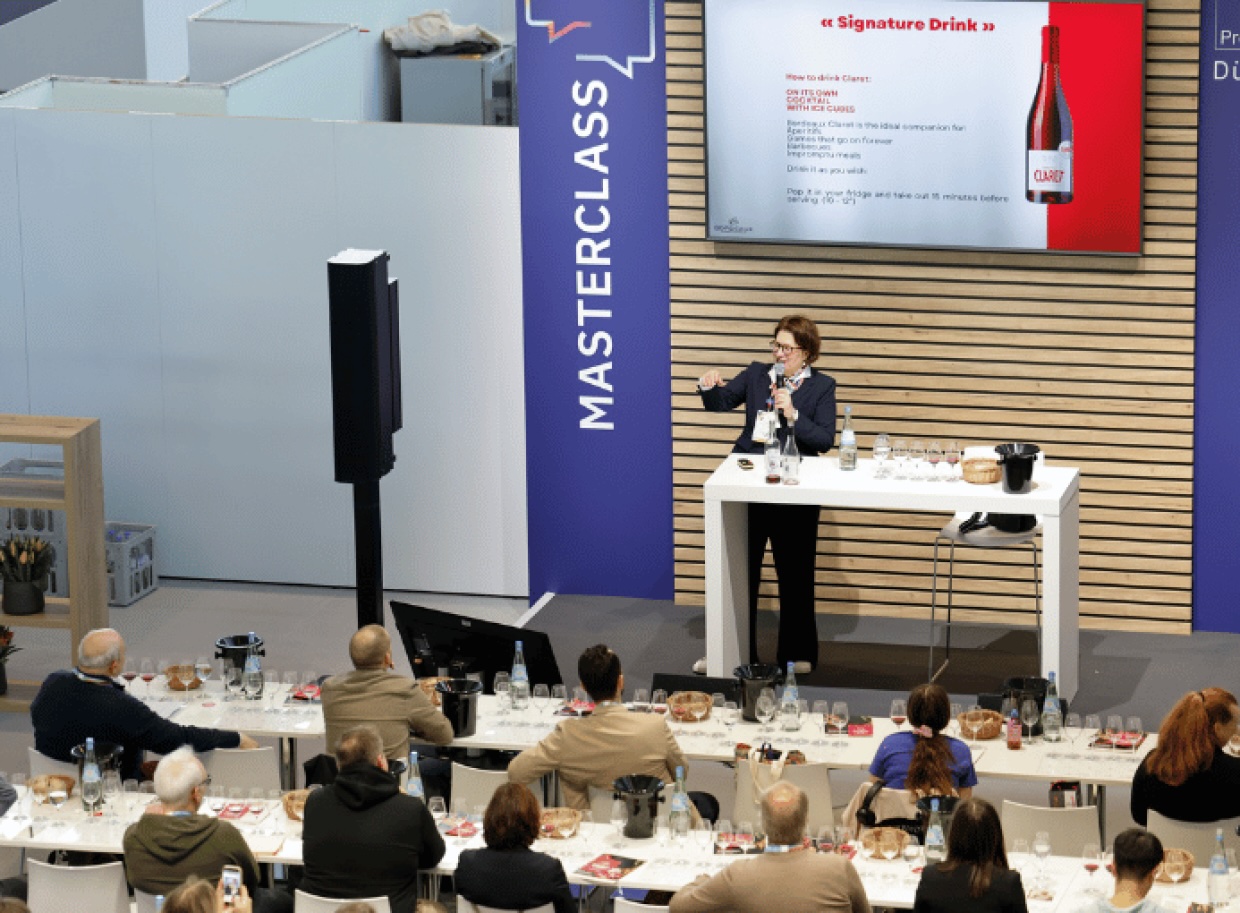
ProWein Düsseldorf Masterclass / Messe Düsseldorf @Tillmann
One of the longstanding criticisms of large international exhibitions is that smaller exhibitors struggle for visibility among major brands and large national pavilions, so if the Discovery Zone succeeds in attracting buyers specifically looking for new producers, it could help address that imbalance.
Of course, much will depend on how it is managed. Shared exhibition concepts have appeared at other international fairs with varying degrees of success. The real measure of success will thus be whether buyers actively treat the area as a destination rather than simply another hall to walk through on their way to somewhere else.
Good timing for CEE producers
The concept is arriving at an interesting moment for Central and Eastern Europe.
International buyers are showing growing interest in indigenous grape varieties, regional authenticity and wines with a strong sense of place – all areas where producers from Hungary and neighbouring countries have genuine strengths.
Hungarian wineries, for example, have much more to offer than Tokaj alone. Regions such as Somló, Szekszárd, Villány, Eger and Balaton continue to gain international recognition, while varieties including Furmint, Kékfrankos, Kadarka, Olaszrizling, Hárslevelű and Juhfark offer the kind of differentiation many importers now seek.
Quality has also improved significantly over the past decade across Croatia, Serbia, Slovenia, Romania, Bulgaria and Slovakia, and they also have their fair share of local and regional varieties. The challenge is clearly no longer producing interesting, export-worthy wines; it is getting them in front of the right buyers.
A return to ProWein's original strengths?
Rather than trying to compete with every international exhibition on every front, ProWein appears to be narrowing its focus.
"The future lies – much like in wine production – in specialisation," Schindler says. "Every company needs a clearly defined profile."
Instead of positioning itself as the place where every global wine business meets every other, ProWein is returning to one of its traditional advantages: Germany remains Europe's largest wine import market, while Düsseldorf sits at the centre of one of the continent's biggest concentrations of importers, distributors and specialist retailers.
That geographical reality arguably remains ProWein's strongest asset.
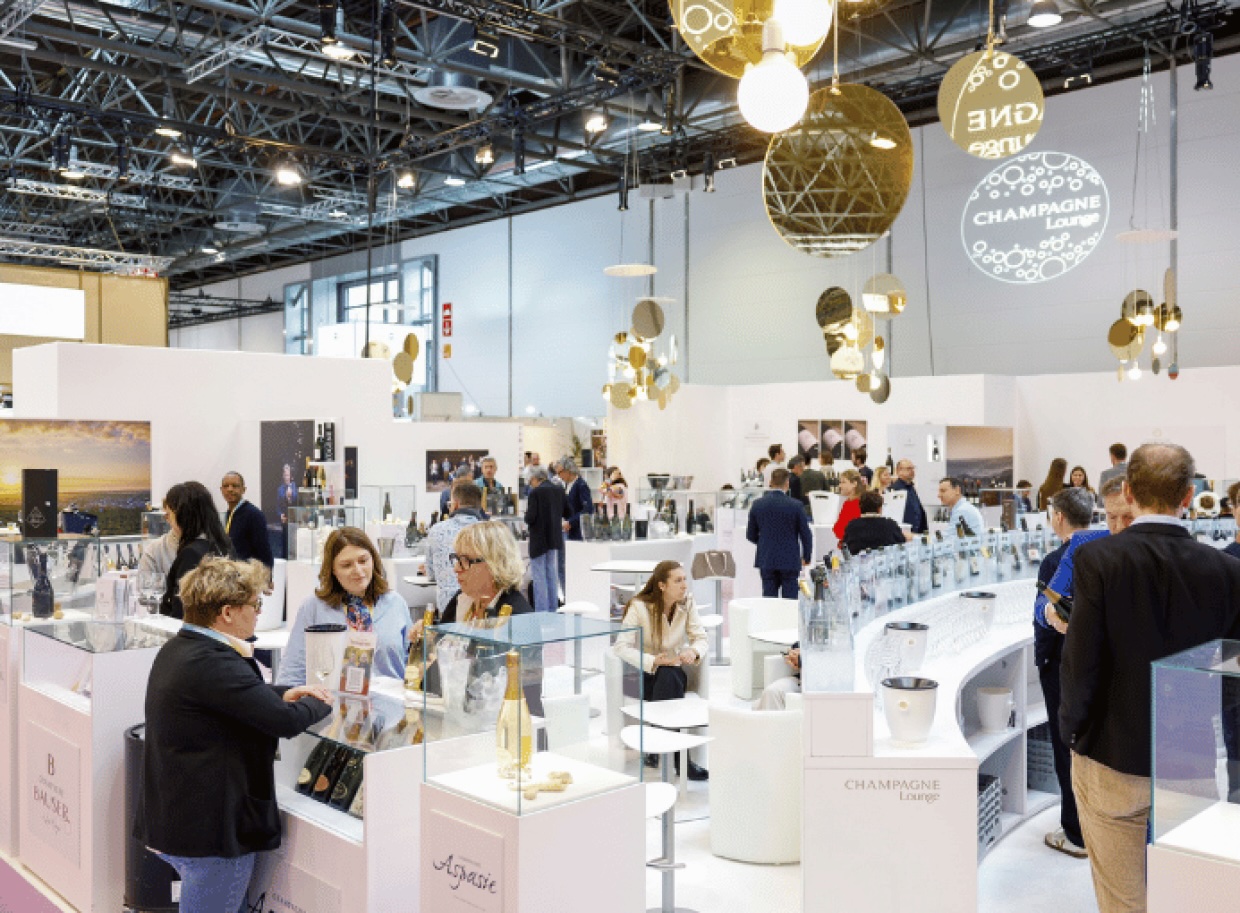
Champagne Lounge ProWein Düsseldorf / Messe Düsseldorf @Tillmann
The expanded Hosted Buyer Programme is intended to build on this by bringing qualified buyers from Germany, Austria, Switzerland, Austria, Benelux, Scandinavia, Eastern Europe, the UK and selected international markets directly to exhibitors. For wineries whose primary objective is finding importers rather than collecting medals or media coverage, this could prove more valuable than simply exhibiting at the largest possible event.
Wine is still a relationship business
Schindler rejects the idea that digital communication has made trade fairs obsolete.
"Many business transactions are handled via video conference these days," he says. "But that only works if a relationship already exists."
Export partnerships in the wine sector are indisputably still built around trust, personal meetings and tasting wines together. So for smaller producers - whose story is often as important as the wine itself – it is still one of the strongest arguments for attending international exhibitions.

Frank Schindler ProWein / Messe Düsseldorf @AndreasWiese
Other practical changes
ProWein is also making other practical changes that exhibitors should welcome. Prices will remain unchanged despite inflation, exhibitor numbers will be capped at around 4,000 to improve the visitor experience, and networking and educational programmes will continue to expand.
Nevertheless, for wineries investing thousands of euros to attend the fair, success will be measured much more simply: meaningful conversations, serious buyers and orders that justify the expense. ProWein's repositioning suggests it understands that reality. Yet the quality of buyers the new Discovery Zone attracts will determine whether it becomes a genuine launchpad for emerging producers – or simply another exhibition concept. For ambitious wineries from Hungary and the wider CEE region, it could be one of the more interesting developments to watch ahead of the 2027 export season.