

Photos: Daniel Ercsey
A few tips to start with: head to the ferry terminal an hour before departure (if you’re driving) and get in line, otherwise you might not make it onto the ferry you’re aiming for. The ferry’s snack bar is outrageously expensive, so bring your own sandwiches and drinks.
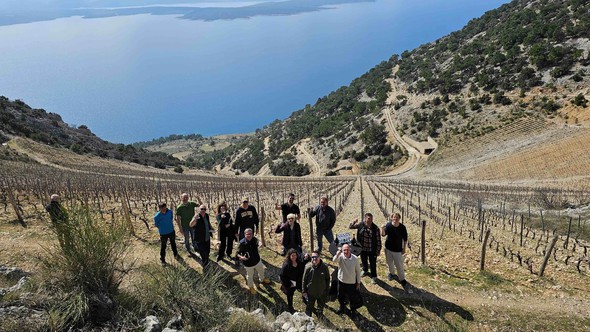
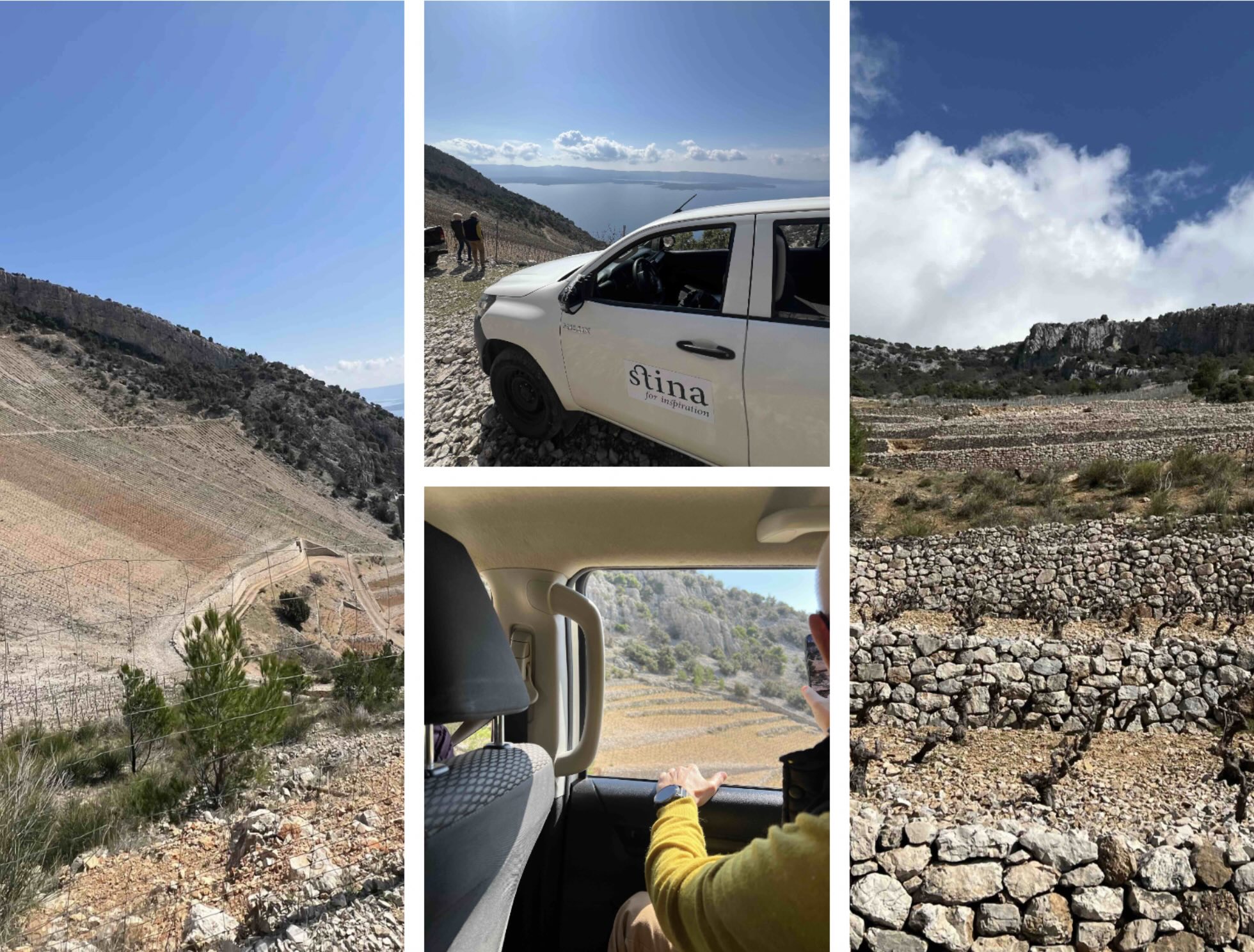
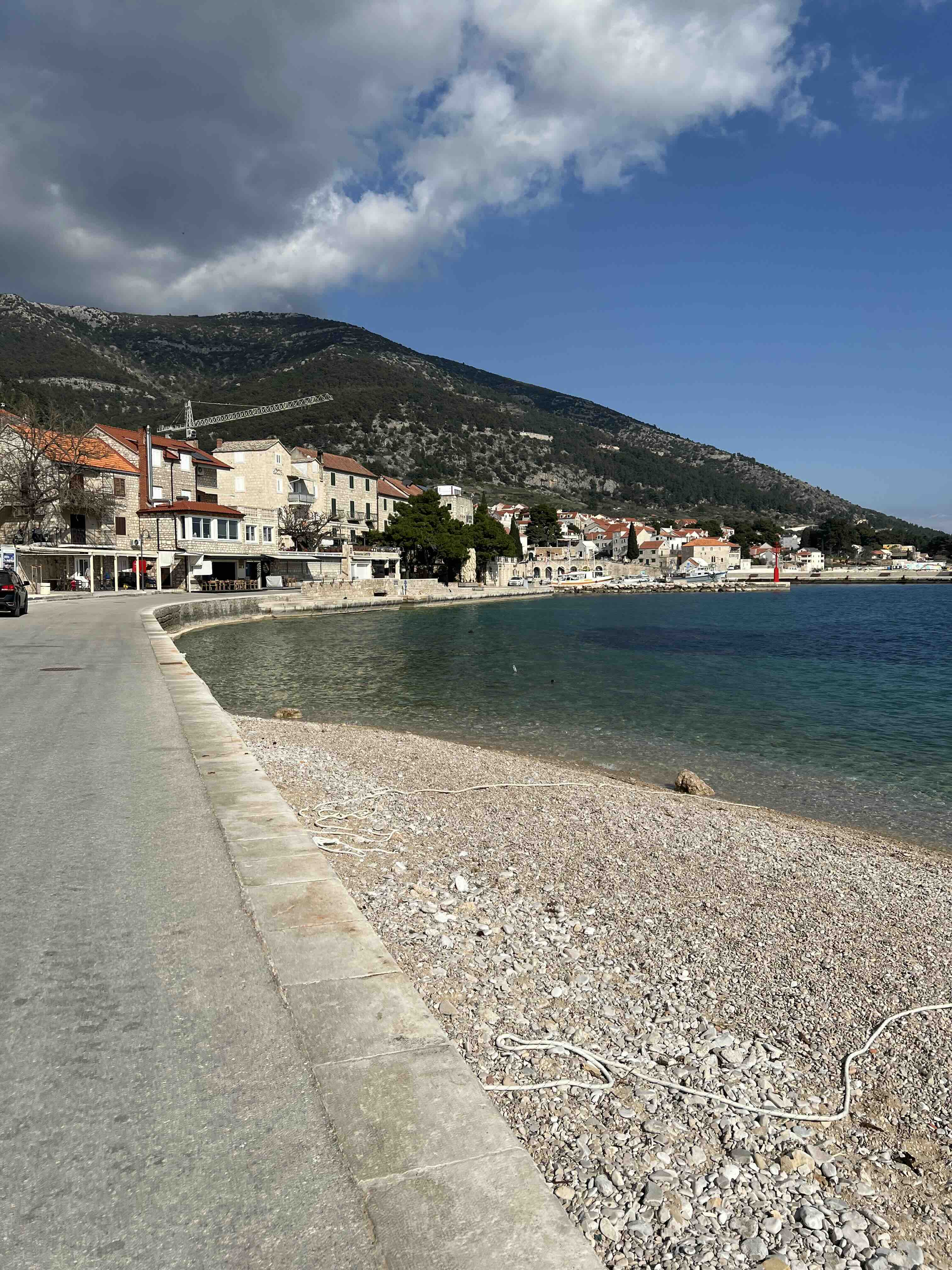
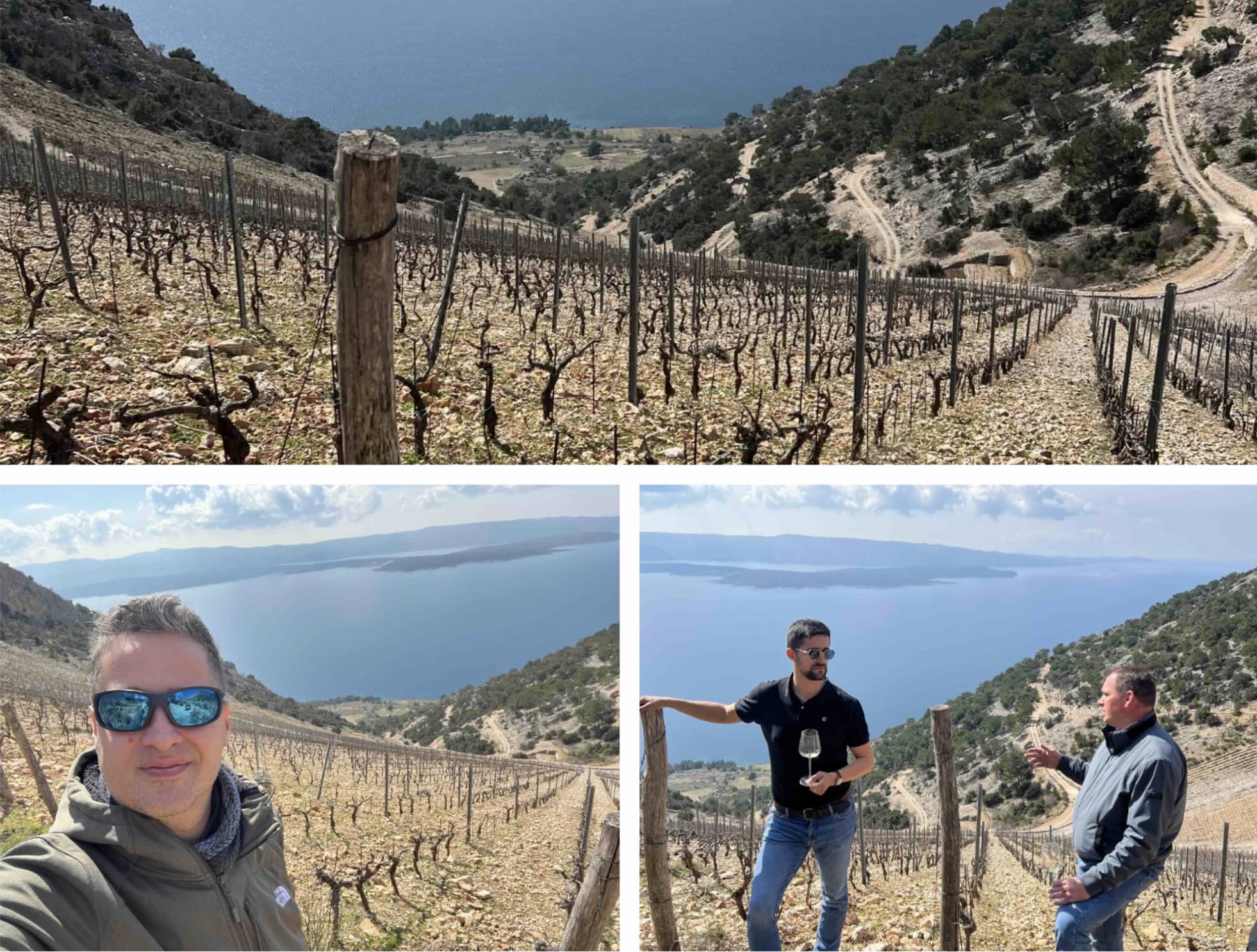
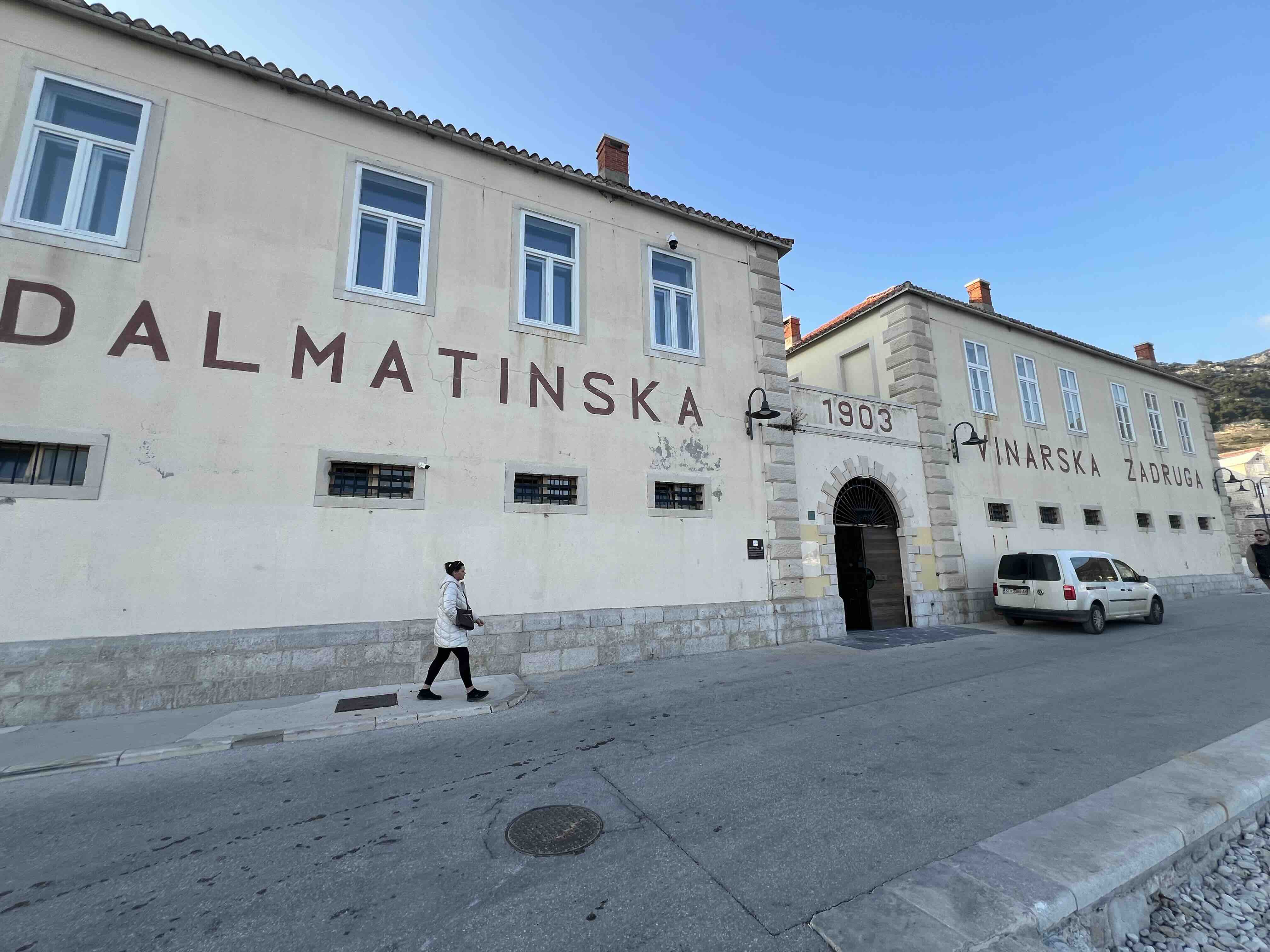
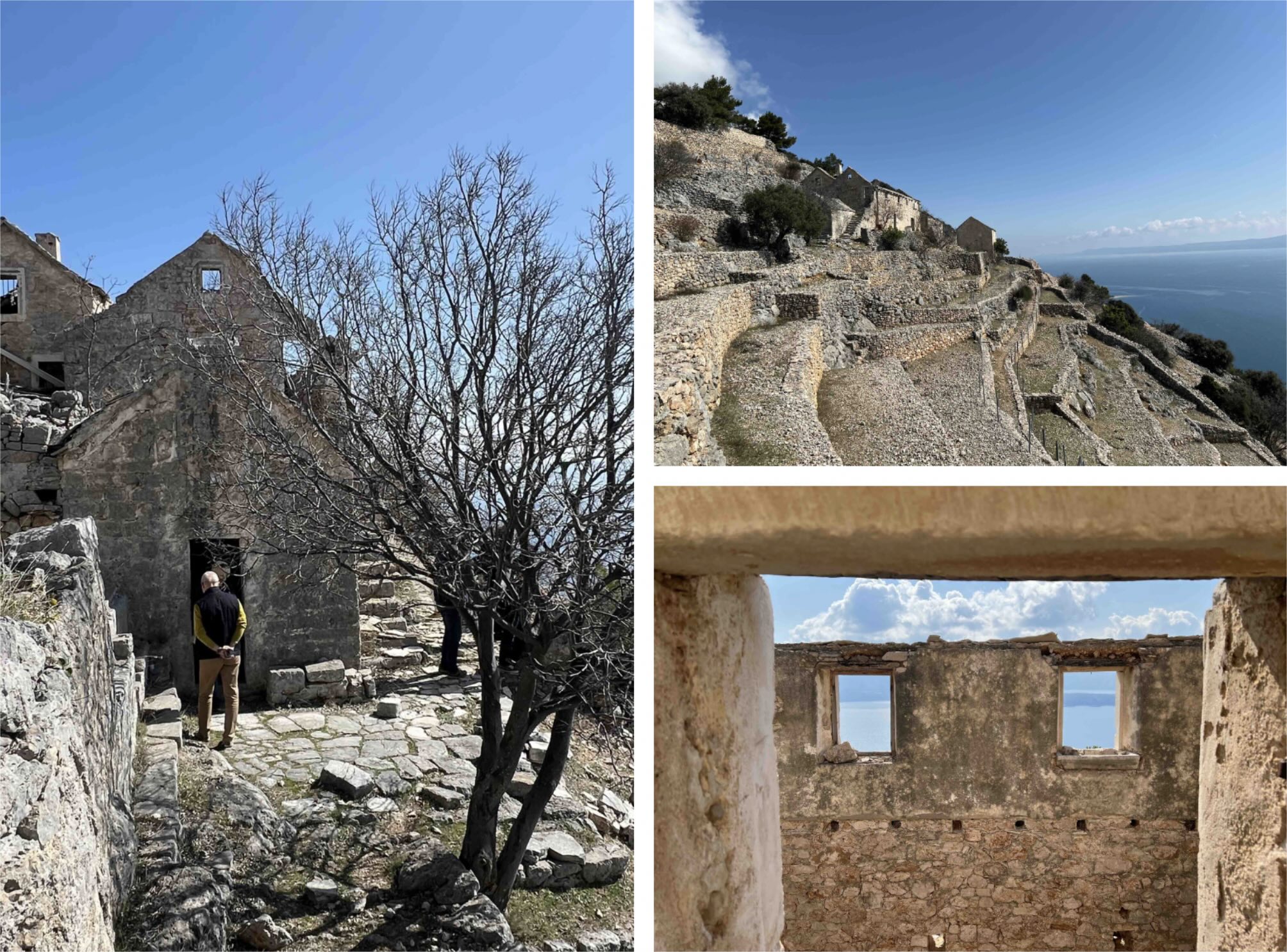
So, Brač—the island famous for the marble and limestone quarried here that were used to build the palaces of Split and Venice. The side facing Split, whose “capital” is Supetar—where the ferry also arrives—rises gently to over 700 meters, making Brač home to the highest point of the Adriatic islands, while the southern side drops steeply and is jagged with cliffs toward the sea. This is where the town of Bol and the legendary Stina vineyard, Stipančić, are located.
Brač 1903 Godiment 2024 (Chardonnay 70%, Pošip 15%, Vugava 15%) I 88 points
A lemon color deeper than medium, with slight greenish reflections. The aroma has a sur lie character, with butter, lots of white flowers, jasmine, and apple. On the palate, it’s full-bodied with lively acids, a broad mouthfeel, saltiness, butteriness, citrus, and silky tannins. Absolutely superb, with a long finish.
Vugava 2015 I 91 points
Deep lemon color. Pollen on the nose, accompanied by cantaloupe and a hint of fig. Full-bodied, beautifully ripe, with a touch of petrol, mango, and pineapple; lively acidity, gorgeous ripeness, medium finish, with a hint of toasty notes.
Vugava 2019 I 90 points
Deeper than medium lemon color with greenish reflections. Restrained aroma, a hint of earthiness, pineapple and toffee in the background. Larger than medium body, round acids, beautiful ripeness, pollen, petrol, mango, pineapple. Very drinkable.
Vugava 2022 I 88 points
A lemon color deeper than medium. Restrained aroma, a hint of butteriness, lively acids, citrus, lemon zest, pineapple, a touch of earthiness. Very drinkable, round, juicy, but there’s a bit of uncertainty, a certain wildness. Does it still need to age?
Vugava 2023 I 90 points
Medium lemon color. Subtle aroma, lively, vibrant acidity, yet round, broad on the palate, minerality, pineapple, a hint of butter, super refreshing yet complex, a great white wine, undeniably so. Only the finish could be longer.
Vugava 2024 I 88 points
Medium lemon color. Tropical fruits, mainly pineapple on the nose, a bit more pronounced than in the others. More than medium body, round yet with good acidity, salty lemon, pineapple. The usual, one might say. The finish is medium.
Vugava 2025 tank sample I 91 points
Medium lemon color. Intense green apple aromas with pine nuts and a hint of resin in the background. Medium body, a touch of roundness, a hint of butter, lots of pineapple, green apple. Super fruity, a very nice wine with lively acidity. Long finish.
Quick update: Vugava is an ancient Croatian grape variety. Or is it? It’s indigenous, but not to Brač—rather, to the island of Vis. It’s supposedly of Greek origin—Homer, of course, or at least Odysseus—who brought the first vines with him on his ship. True, a few years ago people still believed—and told everyone—that it was the same as the Viognier variety. (Since then, DNA analysis has proven that it is not.) That said, the neighboring island of Hvar was a proven Greek colony in antiquity, so the Hellenic connection might well be true. In any case, it’s no wonder that Stina planted it; the wine has proven itself time and again, as it seems.
Pošip 2024 I 91 points
Medium lemon color with a slight greenish tinge. The aroma has a striking tropical fruit character with a hint of mint. Full-bodied, concentrated acids, pineapple, mango, mandarin, and spices. Long finish—superb!
Pošip 2025 I 91 points
Medium lemon color with greenish highlights. The aroma is still a bit banana-like, accompanied by plenty of pineapple, lively acidity, medium body, enormous aging potential, and a very long finish.
Pošip Majstor 2023 I 91 points
A lemon color deeper than medium. Complex aroma with pineapple, Mediterranean citrus, intense vanilla, and cloves. On the palate, full-bodied with a broad mouthfeel; battonage and barrel spices dominate, including the finish, which is notably long.
As for Pošip, the situation is perhaps a bit simpler. It is also an indigenous variety, originating from the island of Korčula, where it was most likely created through natural cross-pollination. Its parents are the Bratkovina and Blatska Zlatarica grape varieties, which are also native to the island—obviously thanks to the Greeks, Romans, Italians, or perhaps even Marco Polo, who, according to the locals, was born on Korčula. It is the undisputed star of today’s Dalmatian white wine scene; everyone is planting it left and right.
Opel Rosé 2025 (Plavac Mali 50%, Syrah 25%, Merlot 25%) I 88 points
Medium onion-skin color. Intense aroma, ripe, with lots of red berries and a hint of sweet spice. Full-bodied, lively acidity, beautiful ripeness—a serious rosé with plenty of ripe fruit. Superb! Not your average rosé—once you’ve tasted it, you won’t forget it!
Bogondon 2024 (Plavac Mali 70%, Cabernet Sauvignon 10%, Merlot 10%, Syrah 10%) I 88 points
Deep ruby color. Intense aroma, lots of red and black berries, spices, concentrated yet juicy. On the palate, medium-bodied, lively acids, very drinkable, fruity, superb!!!! Lots of cloves in the finish.
Plavac mali 2022 I 87 points
A ruby color deeper than medium. Restrained aroma, cherry, sour cherry, pomegranate. Medium-bodied, silky tannins, good acidity. A very drinkable, modern red wine, but it lacks true varietal character. The finish is medium.
Plavac mali Majster 2021 I 89 points
Medium ruby color with garnet highlights. The nose offers notes of plum, cherry, anise, star anise, lavender, and Mediterranean spices. On the palate, it has a full body, rounded acidity, and firm tannins. The palate is dominated by spice, with a finish longer than average.
Plavac mali Majster 2018 I 91 points
Medium ruby color with garnet highlights. Intense aroma, with a hint of cocoa bean, much more sour cherry and black cherry, and raspberry. Full-bodied, with better tannin management than in 2021. Elegant, long.
Plavac mali Majster 2015 I 92 points
Deep garnet color. On the nose, hints of leather, cedar, and dried plums. On the palate, dense, clinging tannins, full-bodied, with rounded acids. Plenty of dried figs in both the flavor profile and the finish.
Plavac mali Majster 2012 I 87 points
Deep garnet color. On the nose: strawberry, raspberry; slightly more subdued, as if it lacked true character, as if it had lost its vigor—not in structure, but in flavor. The tannins hold the palate; the finish brings back leather and a hint of lavender.
Plavac Mali Majster 2010 I 91 points
Garnet color. Leather on the nose. Dried fig, seaweed, raspberry, chocolate. Full-bodied, vibrant acidity, clinging tannins; it shows a very nice character—mature yet lively and fruity. It still has plenty of reserves.
Plavac Mali is the quintessential Dalmatian red wine: full-bodied, a wild tannin bomb, and of course, in this climate, 16% or 17% alcohol is not uncommon. When its genetics were studied, it was discovered that its two parents are also Dalmatian or Balkan varieties: Dobričić and Crljenak Kaštelanski. The latter is known by many other names: Zinfandel, a heavyweight in California; Primitivo from Puglia; Kratošija from Montenegro; or the grape variety often called Pribidrag or Tribidrag along the Dalmatian coast—they all refer to the same thing.
Tribidrag 2022 I 92 points
A ruby color, slightly deeper than medium. Intense aroma, purple flowers, lots of black berries, overwhelming. Raspberry and sour cherry jam, sweet spices, full-bodied, round acids, dense tannins on the palate. The finish is long, lean, with notes of sour cherry juice and chocolatey tannins. Super!
Plavac mali Stipančić 2021 I 91 points
Deep ruby with garnet reflections. Full-bodied, raspberry, plum, and sour cherry, a hint of jam, dense tannins, spices, lively acids. Superb.
Plavac mali Stipančić 2020 I 94 points
Deep ruby color with garnet reflections. The nose is initially leathery and animalic, with a hint of blackberry, followed by increasingly intense chocolate and cocoa bean notes. The body is full, the acids are vibrant, and the palate echoes the nose, complemented by black cherry, plum, and star anise. The finish is very long.
Plavac mali Stipančić 2019 I 89 points
Deep ruby color with garnet reflections. The nose features a seaweed-like, dried sea grass note characteristic of Dingac (which, of course, is a vineyard in Pelješac where Plavac mali is also grown), alongside dried plums. Full-bodied, with round acids, clinging tannins, and high alcohol.
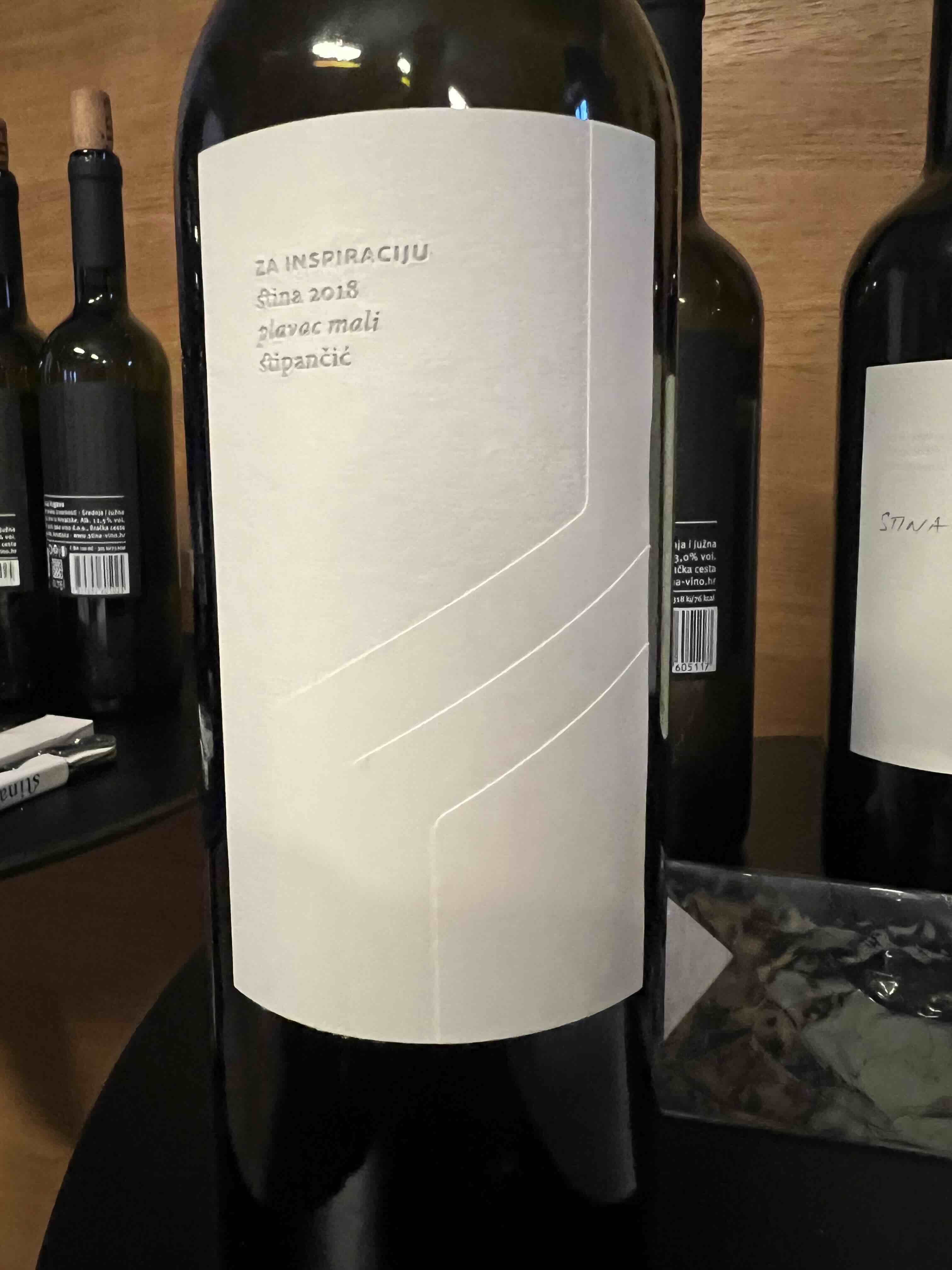
Plavac mali Stipančić 2018 I 92 points
Deep ruby color. The aroma is very ripe, with chocolate, cognac-soaked cherries, and plum jam. On the palate, full-bodied, dense tannins, a warm character, ripe, velvety, soft, with plenty of Eastern spices, and a long chocolate finish. Superb!
Plavac mali Remek djelo magnum 2011 I 93 points
Deep garnet color, with aromas of tobacco and cocoa beans, a hint of vanilla and leather. On the palate, it’s the same story: firm tannins, full-bodied, well-rounded acidity, and here the fruit even comes through, mainly in the form of cherry jam and dried plums. The finish is long.
We also got a Prošek at the end, but I can’t explain what it is any better than I do in my book (Sinbad goes to a wine competition), so here’s an excerpt from it:
We must also mention Prošek, which is not a grape variety but a production method: the grapes are sun-dried, then harvested, pressed, and fermented. The result: noticeable residual sugar (sometimes more, sometimes less), high alcohol content. It could even be a passito if, after drying, the raisins were shoveled into a barrel—some people do just that—ergo, every Dalmatian passito is a Prošek, but not every Prošek is a passito. Especially since the official regulations can add to the confusion, stating the following: Prošek can be made from both white and red grapes; its color can range from deep yellow through gold to reddish-brown; its flavor is always raisin-like, though it may have some sweet, spicy, or woody undertones; however, its alcohol content clearly ranges between 13% and 20%. It’s a good thing they specified that it must be sweet; otherwise, you could even label a Pelješac Plavac Mali as Prošek.
Prošek 2018 (65% Plavac Mali, 35% Pošip, 14.6%, 122g sugar, 7.1 acidity, aged 5 years in used barrels) I 95 points
A garnet color deeper than medium. The aroma features toffee, chocolate, plum jam, and fig jam—sweet and deep—then suddenly becomes intensely spicy, reminiscent of a Port, with notes of curry, cherry, the scent of old furniture, and sandalwood. The finish is endless.
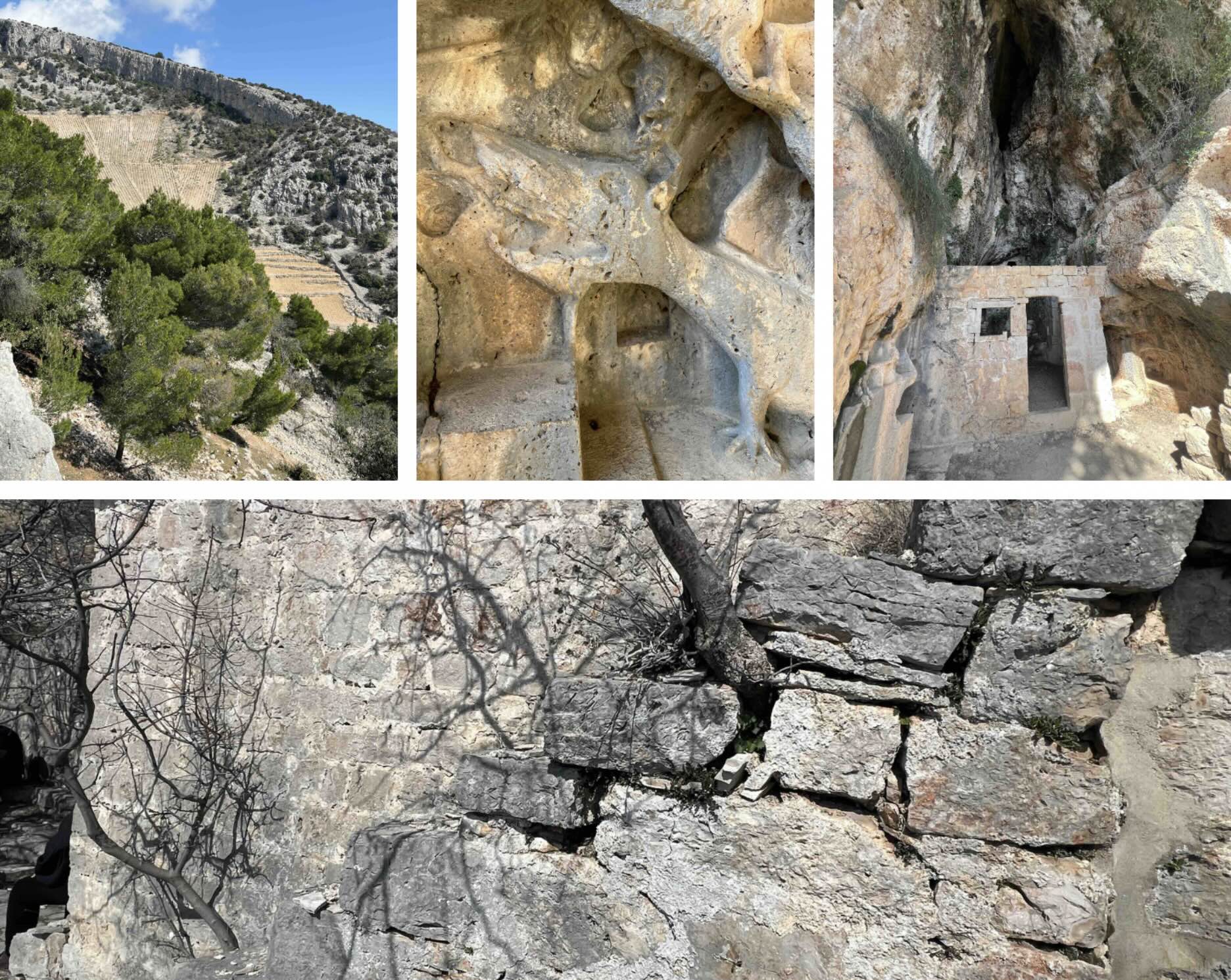
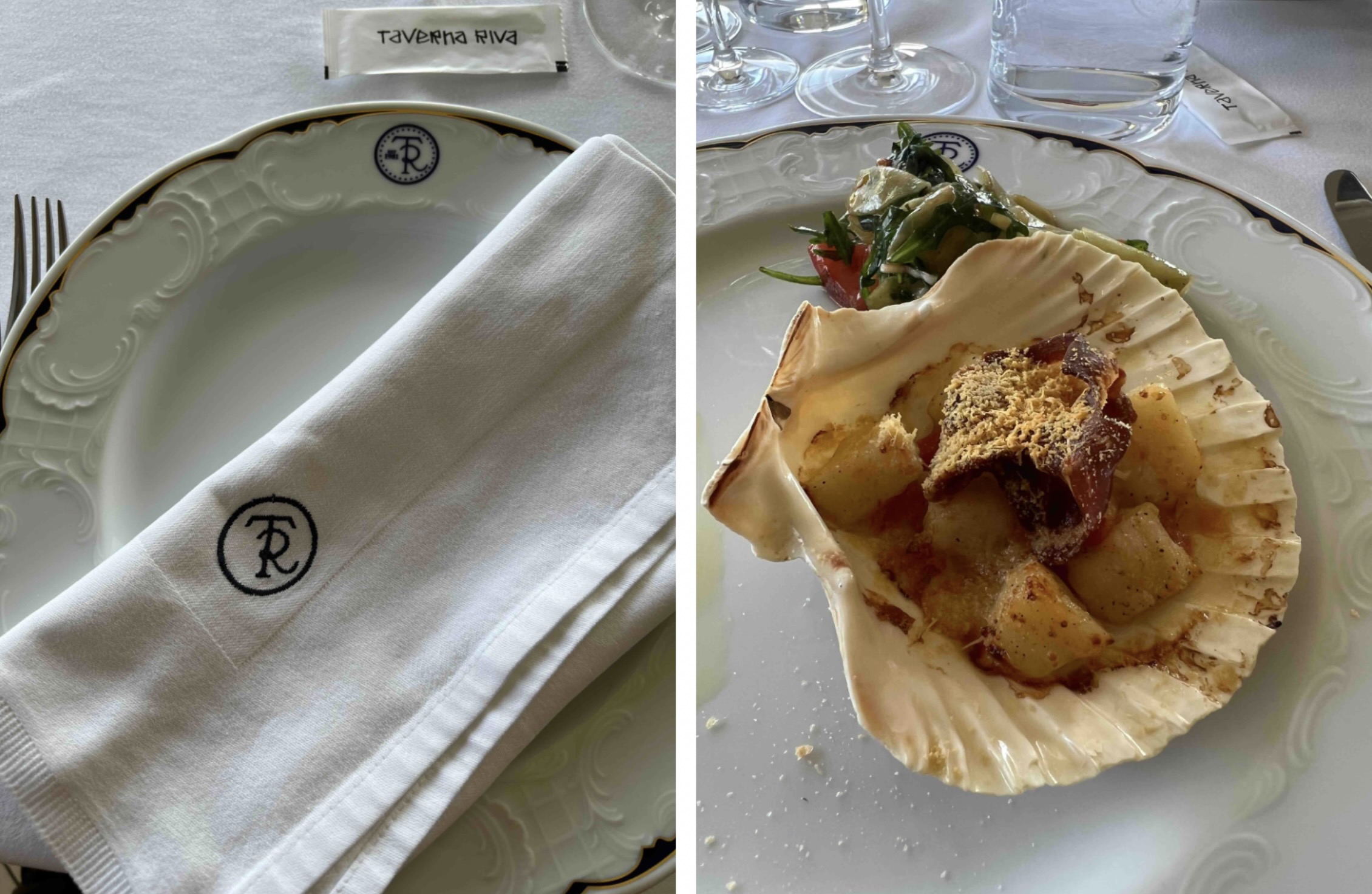
As for the full-day program mentioned at the beginning, you can sign up in advance for the vineyard tour on the winery’s website, but you can also visit the Dragon’s Cave and the former monastery; guided tours are available for these as well. Before or after the wine tasting, head to the neighboring Taverna RIVA, where you can pair Stina’s wines with a wide selection of seafood, to everyone’s great satisfaction. On a hot summer day, what more could you ask for from life?